Complete NCERT Solutions Guide
Access step-by-step solutions for all NCERT textbook questions

Welcome to the Chapter 10 - New Empires and Kingdoms, Class 6 Social Science - History Our Past NCERT Solutions page. Here, we provide detailed question answers for Chapter 10 - New Empires and Kingdoms. The page is designed to help students gain a thorough understanding of the concepts related to natural resources, their classification, and sustainable development.
Our solutions explain each answer in a simple and comprehensive way, making it easier for students to grasp key topics New Empires and Kingdoms and excel in their exams. By going through these New Empires and Kingdoms question answers, you can strengthen your foundation and improve your performance in Class 6 Social Science - History Our Past. Whether you’re revising or preparing for tests, this chapter-wise guide will serve as an invaluable resource.
(a) false
(b) false
(c) true
(d) false
(e) true
- bhnbhatta
- Ravikirti
- Xuan zang
Like earlier rulers, some such type of kings conserved a well-organized army with elephants, chariots, cavalry and foot soldiers etc. Besides these, there were military leaders who provided the king with troops whenever he required them. They were not paid on regular basis salaries. Instead some of them received grants of land. They collected some income from the land and used this to maintain soldiers hand horses, and provided equipment for the warfare. These men were called as samantas. Whenever the ruler becomes week, samantas tried to become independent.
Some important administrative posts were now hereditary that are as follows:
- Sometimes, one person held many offices.
- Important men probably had a say in administration.
If Arvind would have to do acting like samundra gupta did, he needs to be brave and should have start taking interest in music and painting.
The answer is no, the ordinary people would not have read and understood the prashastic as there were written in Sanskrit which is the language of learning.
Stay updated with our latest educational content and study tips

Thirty is when the question starts to get raised and you’re able to do something because you know you have the experience—you know you have the responsibility. Here are some ways to consider the choice based on a realistic assessment without idealizing either aspect. Restlessness is one of those things that appears in your early … Read more
Read More
It’s not about starting over if you took a break to care for children, take care of yourself, be healthy or for any other reason. This is a realistic strategy for the recovery of skills, selection of the right job, and overcoming the resume problem. One year, three years or 10 years of a career … Read more
Read More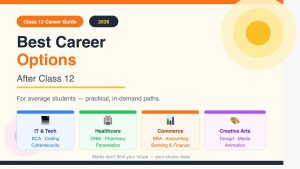
There’s no need to score 95% or achieve a JEE/NEET rank. You don’t need to score 95% or rank in JEE/NEET to build a solid career. A candid and pragmatic guide to the routes that actually work for students who have an average mark and what to do when faced with the options. If … Read more
Read More
AI tools, online platforms that are much cheaper than coaching centres and the changing idea of what “structure” even means have upended this argument more in the past two years than in the decade preceding it. Here’s what is really the case for 2026 – and what has actually stayed the same. If you look … Read more
Read MoreExplore more educational resources to enhance your learning journey

Access step-by-step solutions for all NCERT textbook questions

Practice with latest CBSE sample papers for all classes

Quick reference guide for all important mathematical formulas

Complete multiplication tables with tips and tricks

Discover proven study methods that help students excel in board examinations.

Complete guide to career options and decision-making after completing Class 12.

Learn scientific methods to improve memory and retention for better academic performance.
Join thousands of students who have improved their academic performance with our comprehensive study resources.