Complete NCERT Solutions Guide
Access step-by-step solutions for all NCERT textbook questions

Welcome to the Chapter 9 - The Bond of Love, Class 9 English - Beehive NCERT Solutions page. Here, we provide detailed question answers for Chapter 9 - The Bond of Love. The page is designed to help students gain a thorough understanding of the concepts related to natural resources, their classification, and sustainable development.
Our solutions explain each answer in a simple and comprehensive way, making it easier for students to grasp key topics The Bond of Love and excel in their exams. By going through these The Bond of Love question answers, you can strengthen your foundation and improve your performance in Class 9 English - Beehive. Whether you’re revising or preparing for tests, this chapter-wise guide will serve as an invaluable resource.
An orphaned cub : paragraph 3
Bruno ‘s food – chart : paragraph 6
An accidental case of poisoning : paragraph 8
Playful baba : paragraph 12
Pain of separation : paragraph 14
Joy of reunion : paragraph 16
A request to the zoo : paragraph 18
An island in the courtyard : paragraph 21
1. (i) The narrator says this so.
(ii) Here, him refers to the sloth bear and her refers to the wife of narrator.
(iii) Two years ago, the narrator and his companions were crossing through the sugarcane fields near mystore. All of as a sudden they saw a black sloth bear. One of the companions of the narrator shot the bear on the spot. As they saw the animal fall, they were amazed to see that the black fur on its back moving even after he died. Soon after they realized that it was a baby bear that had been riding on the back of his mother. The narrator ran up to it and attempted to catch it. Succeeded in capturing it and gifted it to his wife.
2. (i) He refers to the bear Bruno.
(ii) Bruno was extremely happy and pleased to see the wife of narrator after three months of separation.
3. (i) We all stands for the narrator, his wife and his son.
(ii) They missed Bruno.
(iii) They felt relieved because Bruno was growing in size and getting too big to be kept at home. That's why he had to be sent off at zoo.
1. Bruno ate some poison-barium carbonate and after eating he started vomiting and breathed heavily, but was later cured. In another incident, he drank nearly a gallon of old engine oil which was made for the rats. Fortunately, he survived but it paralysed and weakened him.
2. Yes, Bruno was a loving and playful pet. Everybody in the family was very emotionally attached to him; especially the narrator’s wife. He was getting too big to be kept at home and had to be sent at the zoo.
3. Bruno wasn’t much happy at the zoo. By seeing his poor condition and state of happiness at seeing the narrator’s wife, he was allowed to go back to Bangalore. An island that was made for the bear, keeping all its requirements and necessities in mind.
1. Field ingredients height mischievous
Friends eighty seven relieved piece
2. Believe receive weird leisure seize
Weight reign feign grief pierce
Knock wrestle walk wrong
Knee half honest daughter
Hours return hornet calm
Could sign island button
1.French revolution : page no. 393, 404-405, 408, 427,487 . Third estate (france): page no. 404, 405
2.Food security and minimum support price can be seen in the following topics: Food availability decline (FAD thesis): 6-7, 7-8, 41-2, 43-4, 53, 57-63, 80- 1, 82-3, 88-93, 111, 117-20, 125, 137, 141, 153, 154-6, 157-8, 162
3.(i) bronchitis due to cigarette smoking: page 223
(ii) heart failure due to bronchitis: page 82
(iii)bronchitis in children: page 178
1. The vet and I both made a dash back to the car. Bruno was still struggling on his stumps, but clearly he was weakening quickly. There was some vomiting and heavy breathing. His flanks were hauling and his mouth was gaping. Everybody was asked to hold him properly. The hypodermic medicine went into Bruno and he squealed loudly. 10 c.c. of anecdote entered into his system without a drop being wasted. Even ten minutes later the condition remain unchanged then another 10 c.c. was injected into him. Ten minutes later, his breathing became less serious. Bruno could move his arms and legs a little bit although, he couldn't stand yet. Thirty minute later, Bruno got up and had a great feed. He looked at us disrespectfully as much as to say, what’s barium carbonate to a big black bear like me? Bruno was still eating.
2. We thought that everything was over when suddenly a black sloth bear came out panting in the hot sun. now I will not shoot a sloth bear; but, unfortunately for the poor beast, one of my companions didn't feel that way like i was thinking about it and promptly they shot the bear on the spot.
(i) (a) rana does her homework timely.
(b) it rains heavily in Mumbai in june.
(c) he does his work properly.
(d) the dog serves his master faithfully
(ii) (a) We should never get down from a moving train.
(b) I was badly in need to support after my poor performance.
(c) Rita met with an accident. The doctor examined her immediately.
3. It was a cold winter’s day and an ant was bringing put some grains of corn from her home. She had gathered the corn in summer. She wanted to dry them. A grasshopper who was very hungry , saw her and said, when did you get the corn ? I am dying of hunger. I collected it in summer, said the ant. ‘’ what were you doing in summer ? why did you not stone some corn? The grasshopper replied , ‘’I was too busy’’. What were you doing?’’ asked the ant again. ‘’ I was singing all day’’, answered the grasshopper. If you sang all summer , said the ant, ‘’ you can dance all winter’’.
Stay updated with our latest educational content and study tips

Government jobs continue to be one of the most popular employment options in India because of their job security, regular salary, pension benefits, and promotion prospects. However, one of the most frequent doubts of aspirants is age eligibility. Countless candidates are discouraged from applying for Government positions – or even from preparing for them – … Read more
Read More
After preparation for NEET and JEE, students inclined towards studying under state education boards find themselves a step behind the CBSE students. The syllabus, question pattern and level of idea of these national entrance exams varies widely from most state board syllabus. But with the correct approach, students taking the state board can hold their … Read more
Read More
Interest is one of the most significant ideas in maths and financial calculations. It is very common in banking, loan applications, investments, saving account and competitive exams. Simple Interest and Compound Interest make it easier to find out how much more is earned and/or paid on a principal during the period of time. These Interest … Read more
Read More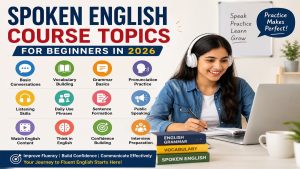
In 2026, students, professionals, and job seekers must have a high level of spoken English. Spoken English is a beginner level course to enhance learners’ communication skills in English, their pronunciation, vocabulary, grammar structure and confidence in speaking English fluently. Today, the emphasis of spoken English courses is placed on actual conversations, everyday speech practice … Read more
Read MoreExplore more educational resources to enhance your learning journey

Access step-by-step solutions for all NCERT textbook questions

Practice with latest CBSE sample papers for all classes

Quick reference guide for all important mathematical formulas

Complete multiplication tables with tips and tricks

Discover proven study methods that help students excel in board examinations.

Complete guide to career options and decision-making after completing Class 12.

Learn scientific methods to improve memory and retention for better academic performance.
Join thousands of students who have improved their academic performance with our comprehensive study resources.